This article is one small part of a long effort by MixedMartialArts.com to understand what works in martial arts. The primary focus is on what happens on the street, rather than in the arena. If you enjoyed it, check out the library on:
•Martial Arts on The Street
•Style vs. Style
•Weapons
A Brief History of Dueling
Dueling is combat sports with weapons, and thus, like combat sports, its origins extend far back into our DNA. Formal duels with swords, or later pistols, developed out of the medieval judicial duel, and far older practices like the Viking Age holmgang; they were means of resolving differences.
In Europe, the United States, and Canada, the practice revolved around the restoration of honor. One’s standing among peers was of life or death importance in that period. An insult on Facebook that might now cause a laugh and roll of the eyes, could back then escalate into trying to murder each other, formally. Upon reflection, we could maybe use a little more dueling today.
In 1842 it happened to the greatest American, Abraham Lincoln, when he was a young man. During a debate about banking in Illinois, Lincoln trolled the State Auditor, James Shields using a female pen name.
“His very features, in the ecstatic agony of his soul, spoke audibly and distinctly–’Dear girls, it is distressing, but I cannot marry you all. Too well I know how much you suffer; but do, do remember, it is not my fault that I am so handsome and so interesting,’” wrote Lincoln.
Shields demanded a full retraction. Lincoln said to ask nicely. Shields challenged Lincoln to a duel, and the future president was honor bound to accept. As Lincoln had been called out, he had the right to choose the weapon, and chose cavalry broadswords “of the largest size.”
Lincoln chose large swords as he didn’t want to kill Shields, or be killed by hum, which he figured would happen with pistols. Lincoln was 6′ 4″ and wrestled competitively for a dozen years, with just one recorded defeat. Shields was a 5′ 9″ bank auditor. Lincoln figured he would be able to disarm his antagonist, but devised a better method still to end the proceeding.
The pair squared off on Bloody Island, a sandbar in the Mississippi River. There was a board between them they could not cross; the plan was they would lunge forward to strike, and then retreat to safety. Without warning, Lincoln reached out with his long arm, and sliced off a tree limb high overhead. Shields then let the crowd talk him out of the duel. Shields and Lincoln later became friends.
But dueling was by no means exclusively an American practice.
The last fatal duel in Canada was in 1833. Robert Lyon challenged John Wilson over something said about a local school teacher. Wilson killed Lyon, and then married the school teacher.
The last fatal duel in England was in 1852, between two French political refugees, Frederic Cournet and Emmanuel Barthélemy. Barthélemy killed his adversary, and was hanged for the offense.
The last fatal duel in the United States was in 1859. Pro-slavery ex-California Chief Justice David Terry killed abolitionist United States Senator David Broderick. Terry was arrested, but the case was dismissed. The site where the pair stood 10 yards apart is now a California Registered Historical Landmark. The pistols used sold at auction in 1998 for $34,500.
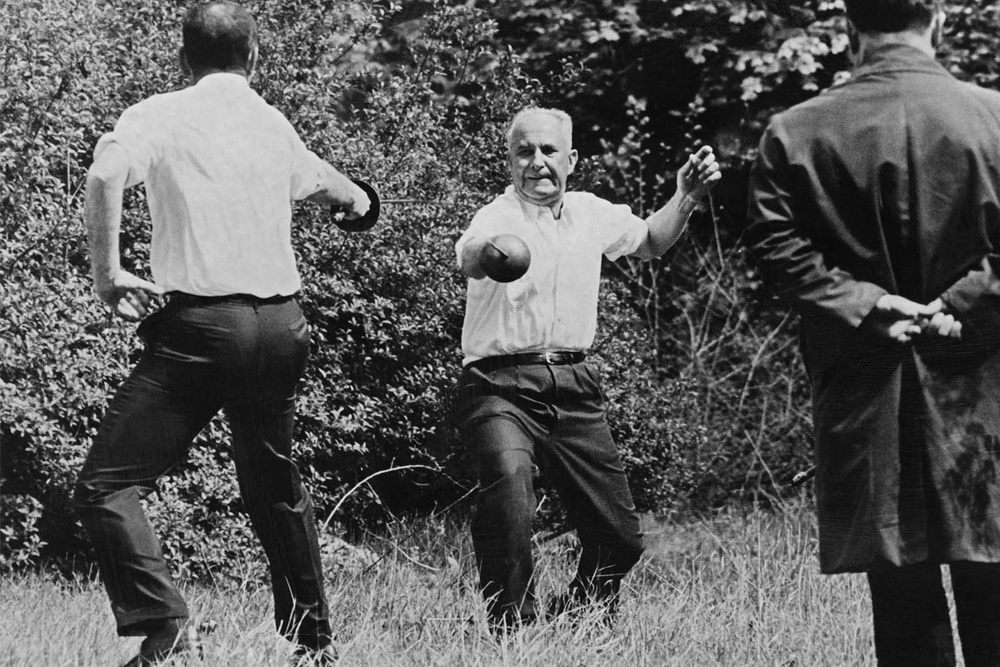
However, the practice lingered in pockets. In fact, the last duel in France took place in 1967, and it was filmed.
The Last Duel
Everyone has seen countless sword fights in films like Gladiator, Conan the Barbarian, Star Wars, and The Princess Bride (1987) documentary. This is what a duel with swords actually looks like.
What Was That About?
Gaston Defferre, then mayor of Marseille and the Socialist party candidate for president, was speaking in parliament, when René Ribière began fidgeting in his seat.
Shut you, a**hole!” shouted Defferre.
In return, Ribière challenged Defferre to a duel, using an épée.
The épée evolved from light civilian weapons commonly used for dueling, like the small sword. Dueling swords were developed under pressure from the authorities, to emphasize first blood, rather than to the death.
Defferre, who was older by twelve years, offered dull swords; Ribière demanded sharp swords, to first blood.
Ribière refused to stop when he was bloodied for the first time, but when it happened again, his second terminated the combat.
Defferre later served as the Interior Minister under François Mitterrand from 1981 to 1984, and died of natural causes on May 7, 1986, at age 75.
Ribière died on Christmas day, at age 76.
The pair are united forever in history, as the last men in France to duel.
Share your thoughts on The StreetGround Forum at MixedMartialArts.com.